Tour overview
13 days of Egypt. This is where Ancient Egypt meets Adventure Egypt. These are the activities that go beyond the temples and tombs. Visiting a museum that has a treasure trove of ancient Egyptian artifacts and history, seeing hundreds of fossils of some of the earliest forms of whale, and even taking the time to sore over the Nile in Luxor on a balloon ride.
Brief Itinerary
| Day | Highlights | Overnight |
| Day 1 | Welcome to Egypt | Cairo |
| Day 2 | Pyramids day trip | Cairo |
| Day 3 | Cairo Day Tour | Cairo |
| Day 4 | Cairo– El Fayoum – Day Trip | Cairo |
| Day 5 | Cairo – Dahshur & Sakkara – Day Trip | Cairo |
| Day 6 | Cairo / Luxor | Luxor |
| Day 7 | Luxor – Day Trip | Luxor |
| Day 8 | Luxor | Luxor |
| Day 9 | Luxor – Aswan – Overland Drive | Aswan |
| Day 10 | Aswan | Aswan |
| Day 11 | Aswan | Aswan |
| Day 12 | Aswan – Abu Simbel – Cairo | Cairo |
| Day 13 | Departure Cairo |
Included
- Daily accommodations, as mentioned in the itinerary, include all hotel taxes and service charges. Meals as indicated in the itinerary (B= Breakfast, L=Lunch, Boxed Lunch, D=Dinner, )
- All sightseeing and entrance fees as indicated in the itinerary. Egypt Visa on Arrival. Fully English-speaking accompanied Egyptologist guide.
- Abu Simbel day trip is an on-private basis with shared flights. Internal airfare (Cairo / Luxor & Aswan / Abu Simbel / Aswan Cairo) in Coach Class.
- A comprehensive assortment of pre-tour materials and amenities. Big Five’s 24-hour White Glove Service® guest assistance.
Not Included
- Any international airfares from the US to Egypt and back to the US, Airport taxes (All taxes are government imposed and subject to change without notice).
- Passport and visa fees. Travel insurance. Excess baggage or shipping charges.
- Items of personal nature such as gratuities, telephone/fax/internet charges, laundry, beverages, meals, and services not specified in the itinerary. Covid 19 test not included
Day 1 : Welcome to Egypt.
Arrive at Cairo International Airport, where you are greeted and assisted through passport and customs formalities before transferring to your hotel.
Day 2 : Pyramids day trip (B/L)
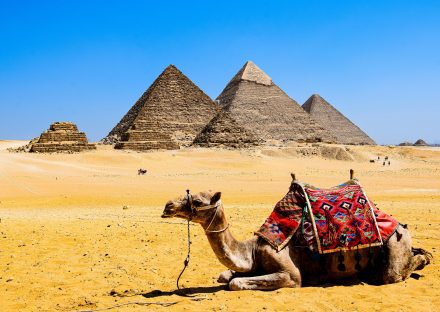
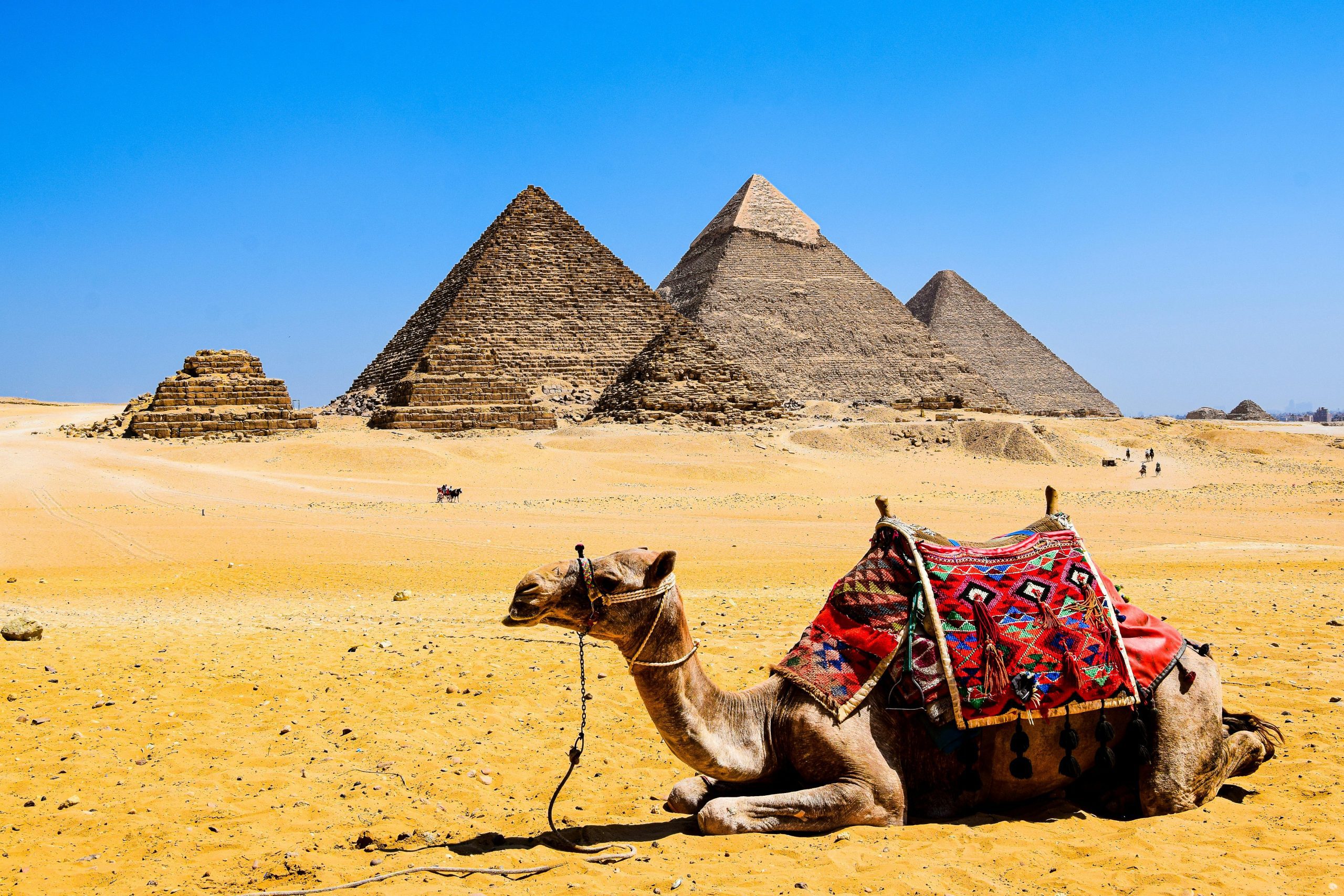
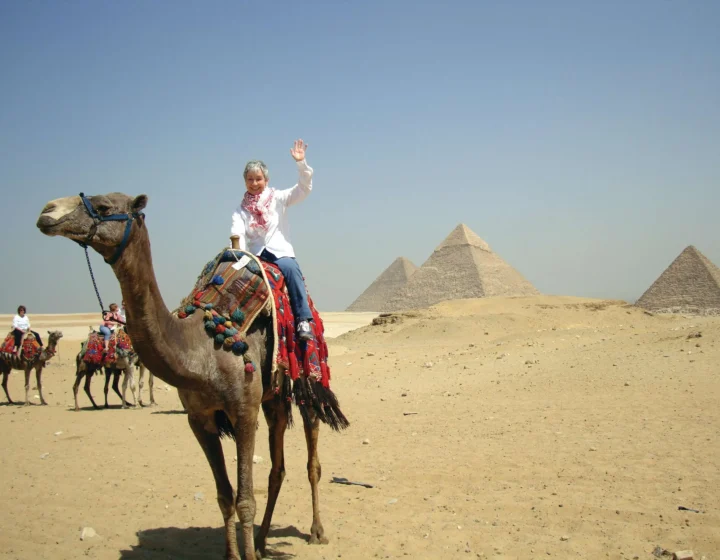
After breakfast, join your guide to begin your exploration of the fascinating Pyramids of Giza. The intriguing history of Egypt is powerfully evoked in the fabled pyramids. Rising from the desert, Khufu (Cheops), Khafra, and Menkaura symbolize the enigmatic tug of Egypt on our imaginations. The Great Pyramid of Cheops immortalizes the son of Sneferu and Hetepheres. Though little is known of this Pharaoh, his monument is the largest of the three. It is comprised of 2.3 million blocks, weighing an average of 2.5 tons.
Enter the great pyramid and visit the chamber of the king. The Great Pyramid of Giza (also known as the Pyramid of Khufu or the Pyramid of Cheops) is the oldest and largest of the three pyramids in the Giza pyramid complex, bordering what is now El Giza, Egypt. It is the oldest of the Seven Wonders of the Ancient World, and the only one to remain largely intact. There are three known chambers inside the Great Pyramid. The lowest chamber is cut into the bedrock upon which the pyramid was built and was unfinished. The so-called Queen’s Chamber and King’s Chamber are higher up within the pyramid structure.
Later visit the colossal statue of the Great Sphinx, which has stood guard over the pyramids for more than 4,500 years. Carved from an outcrop of rock, the Sphinx remains the ultimate symbol of Ancient Egypt with its lion’s body and a human head. The history and the lifestyle of ancient Egyptian pharaohs come alive before your eyes through the professional narrations of our specialist guide.
Enjoy lunch at 9 Pyramids Restaurant before heading out quad biking at the pyramids area.
Experience the race of a lifetime riding on thrilling quad bikes zipping over sand dunes across the Egyptian desert of the Giza Pyramids, the only place in Egypt where you get to feel the thrill of an exciting way to discover all the ancient wonders through this unique experience that will make your holiday in Egypt unforgettable. Return to your hotel.
Day 3 : Cairo Day Tour (B/L)
Have breakfast and then meet at the hotel’s lobby to join our Egyptologist guide for a special tour at the first museum of civilization in the Arab world. The NMEC will present a comprehensive view of Egyptian civilization from prehistory to the present day, taking a multidisciplinary thematic approach designed to highlight Egypt’s tangible and intangible heritage. A museum of a new kind, unknown so far in Egypt and the entire Middle East region, the NMEC’s main goal is to share knowledge, to connect with the surrounding Egyptian society, and to offer international visitors richer and deeper insight into the meaning of Egyptian culture through the ages.
Your guide will take you through cultural landmarks that span three millennia of Egyptian history. Beginning with the Citadel commanding a complete view of the city. Completed in 1183, the Citadel was surrounded by sturdy walls and towers to withstand attacks from Christian crusaders. Inside, you shall see the lavishly decorated Alabaster Mosque of Mohammed Ali.
Continue to Coptic Cairo, where we will visit the famous Suspended Church (Hanging Church), dating back to the late 4th and early 5th centuries. This basilica was named “Al-Mu’allaqah” because it was built atop the south gate of the Fortress of Babylon. Continue to the Church of St. Sergius, a 5th century Coptic Church recently restored Synagogue of Ben Ezra, which marks the place where Moses was saved from the water by the daughter of the Pharaoh and is the oldest Jewish synagogue in Egypt built in 882 AC. Then stroll with your guide through the Khan El Khalili, a bustling warren of shops where you can bargain for leather, perfumes, and other goods both exotic and familiar.
Later this evening you are met by your representative and transferred to the Wekalet el Ghouri to attend the Tannour show. Dinner is at Naguib Mahfouz restaurant at the Khan El Khalili After dinner, return to your hotel for the remainder of the evening at leisure.
Day 4 : Cairo– El Fayoum – Day Trip (B/L)
Today after breakfast your guide who will transfer you by Jeep and car to El-Fayoum to visit:
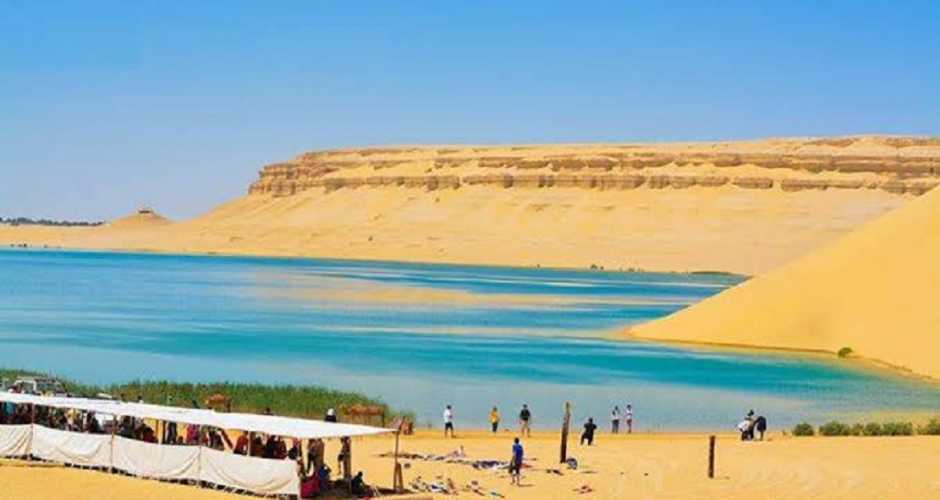
Magic Lake
The Magic Lake is an obscure beautiful lake surrounded by desert so you can go sandboarding beside the Magic Lake, you can go swimming, or enjoy sitting by the amazing waterfall. The lake also contains minerals that help treat patients with rheumatism, and you can also enjoy riding and racing cars through the desert, it’s simply a magical place suitable for a magical trip.
Wadi El Rayan
The Wadi El Rayan is the largest waterfalls in Egypt and has been used for man-made lakes from agricultural drainage, making a reserve of the two separate Wadi El Rayan Lakes. there are three sulfur springs at the southern side of the lower lake, with extensive mobile sanddunes.
Wai El Hitan
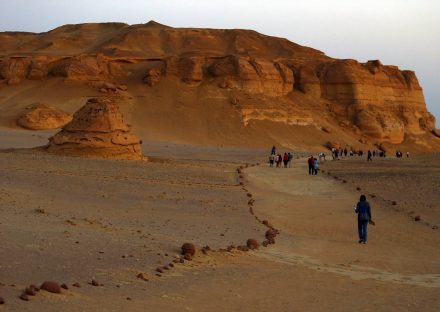
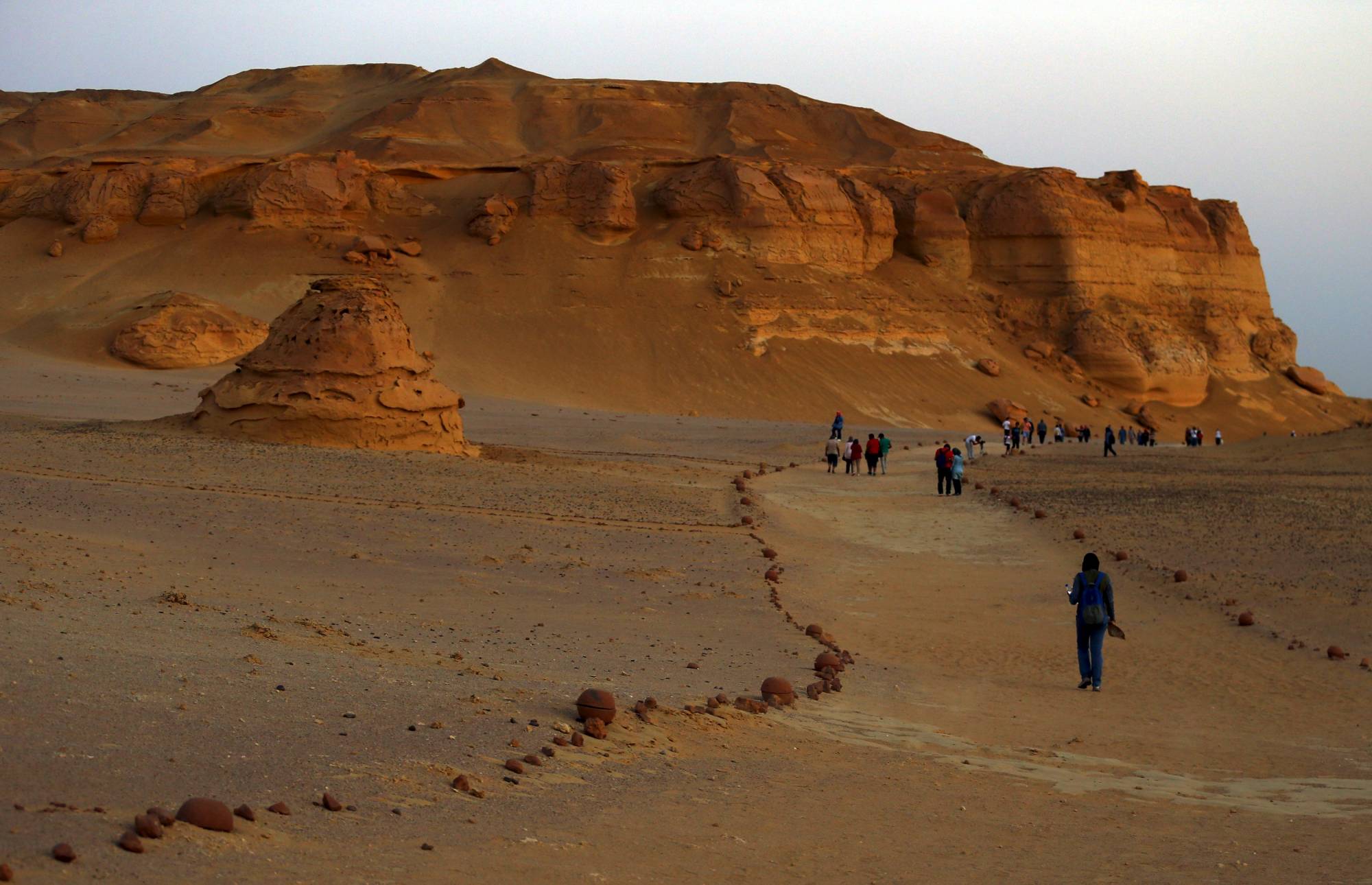
A paleontological site in the Faiyum Governorate of Egypt, It was designated a UNESCO World Heritage Site in July 2005 for its hundreds of fossils of some of the earliest forms of whale, the archeocyte (a now extinct sub-order of whales). The site reveals evidence for the explanation of one of the greatest mysteries of the evolution of whales: the emergence of the whale as an ocean-going mammal from a previous life as a land-based animal. No other place in the world yields the number, concentration, and quality of such fossils, as is their accessibility and setting in an attractive and protected landscape.
Gabal Modawara
The terrain southwest of Cairo drops into a large depression often called the Fayoum Oasis. Several lakes, Egypt's only permanent waterfall, and the unusual Mudawara Mountain (Jebel al- Mudawara) within the area. Although it is more of a rock formation than a true mountain, there are three distinct summits. Its layered appearance is beautiful, with a certain symmetry to the feature that draws your gaze to it.
After the tour, you return to your hotel in Cairo.
Day 5 : Cairo – Dahshur & Sakkara – Day Trip (B/L/D)
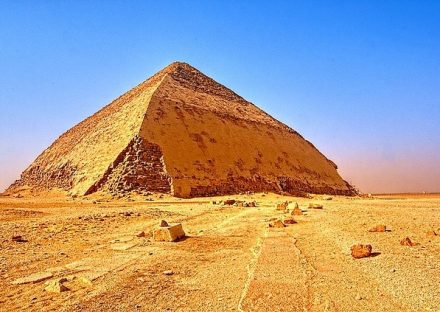
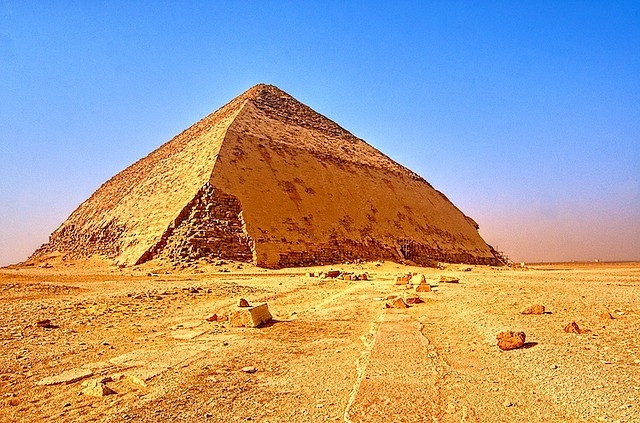
Today after breakfast you meet your guide to explore some of the desert antiquities dating from the beginnings of a civilization that arose more than 5,000 years ago. In the company of your Egyptologist specialist guide, we venture through the countryside to visit some of Egypt's oldest sights. We first go Dahshur which is a royal necropolis located in the desert on the west bank of the Nile approximately 40 kilometers (25 miles) south of Cairo. It is known chiefly for several pyramids, two of which are among the oldest, largest, and best preserved in Egypt, built from 2613–2589 BC. building the Dahshur pyramids was an extremely important learning experience for the Egyptians (who were transitioning from step-sided to smooth-sided pyramids) before they could build the Great Pyramid of Giza. Two of the Dahshur Pyramids, The Bent Pyramid, and the Red Pyramid, were constructed during the reign of Pharaoh Sneferu (2613-2589 BC). The Bent Pyramid was the first attempt at a smooth-sided pyramid but ultimately wasn't successful. One design flaw was that there was a very unstable base for it made of desert gravel and clay that has the tendency to subside when a large amount of weight is put on top of it
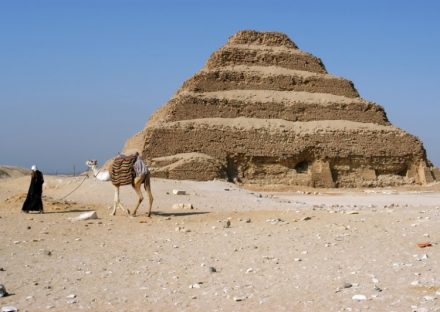
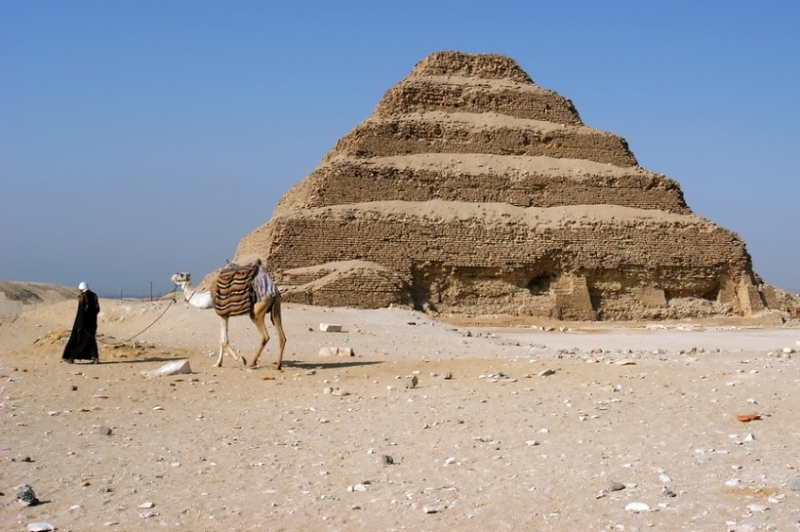
Nearby, we visit the necropolis at Saqqara, where King Zoser's Step Pyramid was "built to last 'till the ends of time". This vast site in the heart of a desert plateau is the largest necropolis in Egypt. Extending for almost 5 miles, the complex forms a collection of pyramids, temples and tombs that is fundamental to understanding the history of Ancient Egypt.
This evening you will be joined by Farah Abuseif, who used to work for the United Nations defending women’s’ rights in Egypt for a night in Cairo as locals do, followed by dinner.
After dinner you are transferred back to your hotel.
Day 6 : Cairo / Luxor (B)
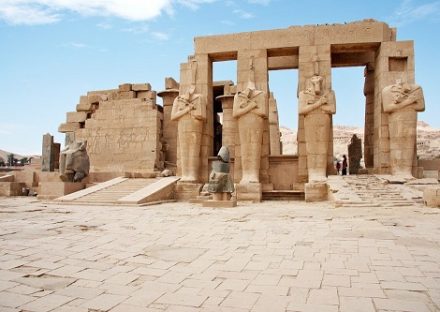
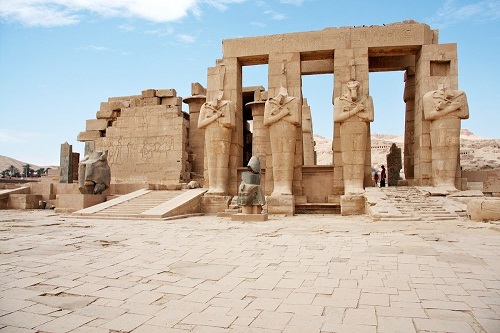
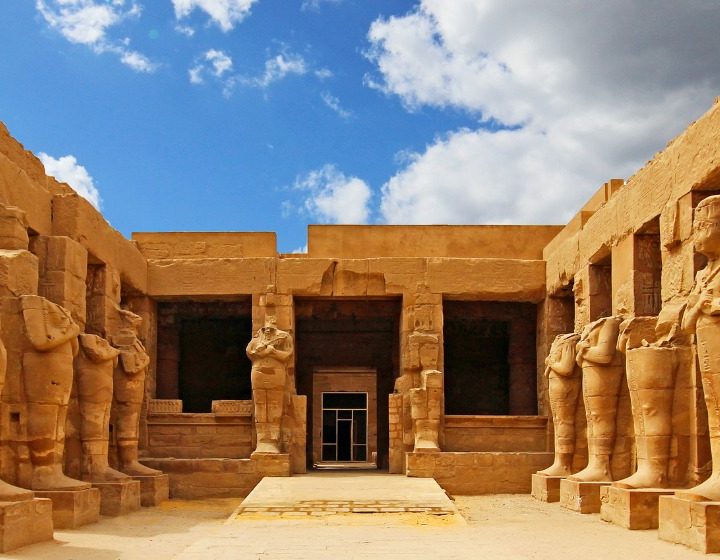
After breakfast, check out of your hotel, you are transferred to Cairo domestic airport for your flight to Luxor, once known as ancient Thebes. First, discover the West Bank of Luxor and begin with Ramesseum, a memorial or mortuary temple for Pharaoh Ramesses II. Ramesseum. The king called his temple "Temple of Millions of Years of User-Maat-Ra," which was one of his titles that means 'the Power of the Justice of Ra.' The temple's construction continued from the beginning of Ramses II's reign until the 22nd year. But not long after the end of the New Kingdom, the king was stripped of its wealth by hungry citizens, and its buildings were used as quarries to construct other monuments. Tombs for major and minor court officials were put into its bedrock; small shrines were built from its stones, and a Christian church was built within the ruins.
The Tombs of the Nobles encompass several distinct areas on the West Bank. These areas are primarily set in five different regions. Further north is an area known as el-Tarif, where large, row tombs were dug during the late Second Intermediate Period and the early Middle Kingdom. Just south of el-Tarif is Dra Abu el-Naga is a hillside with about 80 numbered tombs. Most belonged to priests and officials of the 17th through 20th dynasties.
Just southwest of Dra Abu el-Naga is an area called El-Assasif, where 40 tombs, mainly from the New Kingdom and later, are located. Just south of El-Assasif is El-Khokha, a hill with five Old Kingdom tombs and 53 numbered tombs from the 18th and 19th dynasties. Finally, directly west of El-Khokha is Sheikh Abd el-Qurna. This hill was named for a mythical Muslim sheikh and had 146 numbered tombs, most of which are from the 18th dynasty. Here, one finds some of the most beautiful private tombs on the West Bank.
Day 7 : Luxor – Day Trip (B)
Today after breakfast you meet you guide and start your drive to the Sohag Governorate to visit the temples of Abydos & Dendrah.
Dendera Temple complex is located about 2.5 km south-east of Dendera, Egypt. It is one of the best-preserved temple complexes in Egypt. The area was used as the sixth Nome of Upper Egypt, south of Abydos. The whole complex covers some 40,000 square meters and is surrounded by a hefty mud brick enclosed wall. Dendera was a site for chapels or shrines from the beginning of history of ancient Egypt. It seems that pharaoh Pepi I (ca. 2250 BC) built on this site and evidence exists of a temple in the eighteenth dynasty (ca 1500 BC). But the earliest extant building in the compound today is the Mammisi raised by Nectanebo II – last of the native pharaohs (360-343 BC).
Abydos is one of the oldest cities of ancient Egypt, it is located about 11 kilometers (6.8 miles) west of the Nile. The city was called Abdju in the ancient Egyptian language meaning "the hill of the symbol or reliquary", a reference to a reliquary in which the sacred head of Osiris was preserved. Today, Abydos is notable for the memorial temple of Seti I, which contains an inscription from the nineteenth dynasty known to the modern world as the Abydos King List. It is a chronological list showing cartouches of most dynastic pharaohs of Egypt from Menes until Ramesses I, Seti's father. The Great Temple and most of the ancient town are buried under the modern buildings to the north of the Seti temple. Many of the original structures and the artifacts within them are considered irretrievable and lost; many may have been destroyed by the new construction.
After the tour you are transferred back to your hotel.
Day 8 : Luxor (B)
Transfer to the west bank for a balloon ride followed by breakfast at a local restaurant, afterward, you will start your tour by visiting more sites
The Valley of the Kings consists of the East Valley, where you can find most of the tombs of the New Kingdom Pharaohs, and the West Valley, which has only one tomb open to the public, and that is the tomb of Ay, who succeeded Tutankhamun to the throne.
The tomb of Seti 1 is the longest tomb in the valley, at 137.19 meters, it contains very well-preserved reliefs in all but two of its eleven chambers and side rooms. One of the back chambers is decorated with the Ritual of the Opening of the Mouth, which stated that the mummy's eating and drinking organs were properly functioning. Believing in the need for these functions in the afterlife, was a very important ritual.
The valley of the queens is located near the better-known Valley of the Kings, on the west bank of the Nile across from Thebes (modern Luxor). This barren area in the western hills was chosen due to its relative isolation and proximity to the capital. The kings of the 18th dynasty, instead of the traditional building of pyramids as burial chambers.
The tomb of Nefertari is one of the largest in the Valley of the Queens, covered with pictures of Nefertari. Her husband the pharaoh is not represented in any of the pictures. Nefertari can be seen wearing Greek silver earrings in one of the portraits.
The temple of Queen Hatshepsut of Dynasty XVIII was built just north of the Middle Kingdom temple of Mentuhotep Nebhepetre in the bay of cliffs known as Deir el-Bahri. In ancient times the temple was called Djeser-djeseru, meaning the ’sacred of sacreds’. It was undoubtedly influenced by the style of the earlier temple at Deir el-Bahri & Hatshepsut chose to site her temple in a valley sacred to the Theban Goddess of the West,
After the tour, you are transferred back to your hotel.
Day 9 : Luxor – Aswan – Overland Drive (B/L)
Today after breakfast you are driven from Luxor to Aswan, making stops at the Edfu temple and Kom Ombo temples. (Lunch box will be prepared for you).
the Temple of Horus at Edfu is the most well-preserved and the only one we know to have been completed. Built from sandstone blocks the huge Ptolemaic temple was constructed over the site of a smaller earlier temple, oriented east to west, towards the river.
Visit the Temple shared by two gods Sobek & Haeroris in Kom Ombo
The Temple of Kom Ombo stands on the east bank of the Nile, right next to the river, about 4Km from the town. It was dedicated to two Gods, Horus and Sobek the Temple was mainly dedicated to the God Sobek, the crocodile God, together with his wife, in another form of the Goddess Hathor. The Temple is of Greco-Roman structure, dating back to the year 119 BC, when Ptolemy VI, who started the construction, built it out of limestone.
Upon arrival in Aswan, you will be transferred to your hotel for check-in.
Day 10 : Aswan (B/L)
After breakfast, you are met by your Egyptologist guide to start your touring in Aswan.
The High Dam of Aswan is a great project. In fact, it was one of the most important achievements of the last century in Egypt, even for many years it was a symbol of the New Era of the Revolution of 1952. It provided Egypt with water and electricity and secured the country from the risk of the destructive inundation of the River Nile.
The Unfinished Obelisk lies, in its original location, in a granite quarry in Aswan. It is 42m in length and was most probably abandoned when some cracks appeared in the rock, during its construction. Had this obelisk been completed, it would have been the heaviest obelisk ever cut in Ancient Egypt, weighing nearly 1100 tons! It is believed that it was constructed and abandoned during the reign of Queen Hatshepsut (18th Dynasty).
The Temple of Isis in Philae is one of the greatest Temples in Egypt and it occupies about a quarter of the island. It is the main Temple on the island, with its huge, complete, pylons and beautiful scenes.
The Temple is built in the same style as the Temples of the New Kingdom, as well as some other elements, which appeared in the Greco-Roman period, such as the Mamisi (the House of the divine birth of Horus), and a Nilometer. but the Temple became submerged after the first Aswan dam was built in 1906.
Lunch at a local restaurant near the Philae temple
The Nubian Village is located on an island, the origin of the name of the island is still a mystery. First, it was called Khnum (khnemu), but since Greek times it is known as the Elephantine Island. The island is also famous for its Nubian villages. Nubians are the ancient inhabitants of this region
Day 11 : Aswan (B/L)
After breakfast, you join your guide to hike to the west bank of Aswan where you visit Noble's tombs, the monastery of St. Simon, Kalabsha Temple & the Nubian Museum.
The nobles’ tombs of Aswan: The riverscape of Aswan is dominated by the sand-covered hills of the West Bank which is strewn with rock-cut tombs of high-status officials of the Old and Middle Kingdom. At the crest of the hill is the domed tomb of a Muslim prophet which gives the hill its local name, Qubbet el-Hawa or ‘Dome of the Winds’. At the northern end of the tomb area and a steep climb up several flights of stone steps leads to the upper level of the cemetery where there are around 6 or 7 tombs open to visitors. The guide will usually begin at the southern end of the upper level where the most interesting tombs can be seen. These ancient tombs are roughly cut from the natural rock, and though they are not as well preserved as some of those to be visited in the Luxor or Cairo areas they are well worth seeing. Tombs of this period are usually inaccessible in most places south of Cairo and these show fine examples of hieroglyphic texts detailing the careers of their owners as well as scenes of daily life in the earlier periods. Many of the tombs are linked together as family members added their own chambers.
Kalabsha temple was situated on the west bank of the Nile River, in Nubia, and was originally built around 30 BC during the early Roman era. While the temple was constructed in Augustus's reign, it was never finished. The temple was a tribute to Mandulis (Merul), a Lower Nubian sun god. It was constructed over an earlier sanctuary of Amenhotep II.
Later this evening enjoy a felucca dinner on the Nile
Day 12 : Aswan – Abu Simbel - Cairo (B)
Today you are transferred by flight from Aswan to Abu Simbel.
Arrival Abu simbel and start your tour by visiting the temple of Ramses II & Queen Nefertari
The Temples of Abu Simbel are amongst the most interesting Pharaonic Temples. Located close to the southern border with the Sudan, it is 280 km south of Aswan and consists of two, rock-cut Temples, which both dates back to the reign of King Ramses II (1290-1223 BC). Unfortunately, these unique Temples suffered from the raising water of Lake Nasser while the High Dam was being built.
After the tour you will take your flight back to Cairo where you are met and transferred to your hotel.
Day 13 : Departure Cairo (B)
Today you are met by your guide and given a private transfer to the Cairo international airport in time to connect your international flight to your next destination.
*For those who wish to charter the Dahabiya cruise over the Nile River, this tour can be tailored around your preference